


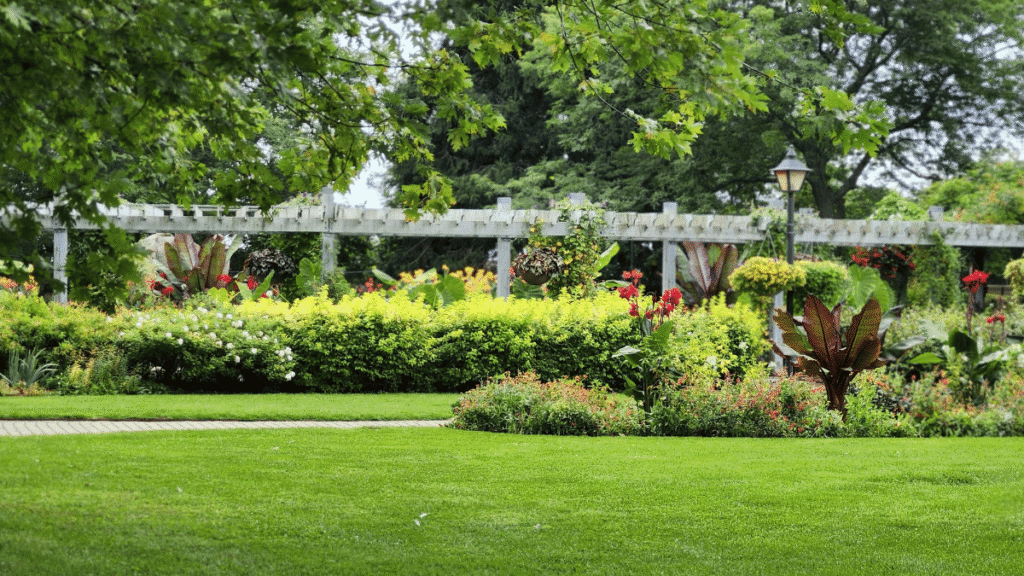
New Jersey is often defined by what people notice first: congested highways; industrialized skylines; dense suburban areas; and bustling beach towns in the summer. These images have dominated New Jersey’s representation in popular media and on postcards.
That is why one of New Jersey’s most commonly used nicknames is still a surprise to many outsiders. The Garden State.
To some, the nickname “Garden State” sounds natural and fitting; to others, it may seem confusing and hard to understand. Yet the nickname represents an agricultural past in the state that has shaped it for years before the construction of highways and office parks.
New Jersey earned this nickname based on its fertile soil, productive farm production, and ability to provide a large portion of the food consumed by nearby metropolitan areas. This heritage still plays a significant role in the state’s identity today.
Origins of the nickname
The use of “Garden State” gained national attention in 1876 during the Centennial Exposition in Philadelphia. During this time, Abraham Browning (a Camden lawyer, farmer, and former New Jersey Attorney General) referred to New Jersey as a “barrel of produce tapped at both ends.” New York City drew from one side of the barrel and Philadelphia from the other. Between these two cities, New Jersey’s farms provided food supplies to both rapidly expanding cities.
The imagery caught on. Newspapers picked up on the term, and politicians repeated it. Prior to the late 19th century, “Garden State” was a commonly spoken term among the population.
The concept was not new. Decades prior, Benjamin Franklin wrote of the same similarities regarding New Jersey’s contribution to feeding the nearby metropolitan areas. However, the populace remembered Browning’s words, and “Garden State” eventually became synonymous with a reality that people understood.
An Agricultural Heritage
Prior to becoming the most densely populated state in the country, New Jersey was known for its farmland. Its geography, climate, and soil composition created a perfect environment for cultivating fruits and vegetables.
Coastal plains, rolling hills, pine barrens, and mineral-rich highlands create diverse ecosystems in New Jersey that support a wide variety of crops, supplying fresh produce to the surrounding regions.
In short order, New Jersey emerged as one of the East Coast’s top agricultural-producing states. Blueberries, cranberries, peaches, tomatoes, corn, peppers, and numerous other crops were produced on New Jersey farms. A favorite crop was tomatoes, which many touted as having no equal in taste due to the soil quality.
Due to its geographic position, New Jersey farmers could deliver their produce to market areas more quickly than farmers farther away. Prior to modern refrigeration techniques, proximity to consumers was critical. New Jersey farmers filled that void.
Supplying Two Major Metropolitan Areas
New Jersey’s role in supplying food products to New York City and Philadelphia solidified the state’s agricultural reputation. Produce traveled to the cities via wagons, boats, railroads, and trucks. Urban dwellers relied on local farms for fresh food.
The inter-relationship between the farmland and the urban areas became integral to how the state was perceived, even as the state developed into an urban area.
State Recognition of the Nickname
While the nickname was widely accepted for many decades prior, it was not officially adopted by the state until 1954. At that time, the New Jersey legislature passed legislation authorizing the inclusion of “The Garden State” on the state’s license plates.
There was considerable debate over whether the nickname should be included on the license plates. Then-Governor Robert B. Meyner opposed the inclusion of the nickname, stating that it did not adequately represent the entire state. The legislators disagreed with Meyner, and the nickname has remained part of the state’s public image since then.
Today, Garden State license plates are recognized nationwide and often prompt people to ask whether the nickname still reflects the state in light of its rapid urbanization.
Is the Name Still Applicable Today?
Even though the state has seen tremendous development, agriculture remains a vital component of New Jersey. There are thousands of farms in New Jersey that cover hundreds of thousands of acres. While they are relatively small, they are highly productive and focus primarily on specialty crops and direct sales to consumers.
Roadside stands, pick-your-own farms, and farmers’ markets are found all across the state. Additionally, programs such as Jersey Fresh emphasize the benefits of consuming locally grown produce and receiving it quickly from producers.
New Jersey is also a leader in preserving farmland. For decades, the state has invested in preserving agricultural lands from development to ensure that farming will continue to play a role in New Jersey’s future.
Why the Nickname Matters
“The Garden State” is more than a slogan. It represents the balance that exists between the state’s dense cities and open farmland, and the inter-relationship between modern industry and agriculture. The nickname also recognizes the farmers who contributed to the state’s initial economic base and the land that provided them the opportunity to do so. Finally, it serves as a reminder to residents that beneath the highway systems and buildings lies soil that has supported generations.
New Jersey is continuing to develop in many ways. The nickname merely recognizes where the state’s growth originated.