


Houston’s housing market is settling into something it hasn’t felt in years: balance. According to the Houston Association of Realtors’ August 2026 report, released September 9, single-family home sales fell 11.5 percent from a year earlier, while the median price slipped just 1.5 percent to $330,000 and active listings held near record levels at a 5.3-month supply. For comparison, the national inventory sits at 4.6 months — meaning Houston buyers now have more choice than most of the country.
It’s a notable shift from the frenzied seller’s market of the pandemic years, and HAR leadership framed it as healthy. “Balance remains the defining characteristic of Houston’s housing market,” HAR Chair Theresa Hill said in the report. Longer days on market — up from 52 to 54 for single-family homes — and steadier pricing point to a market where buyers have regained leverage without prices falling off a cliff.
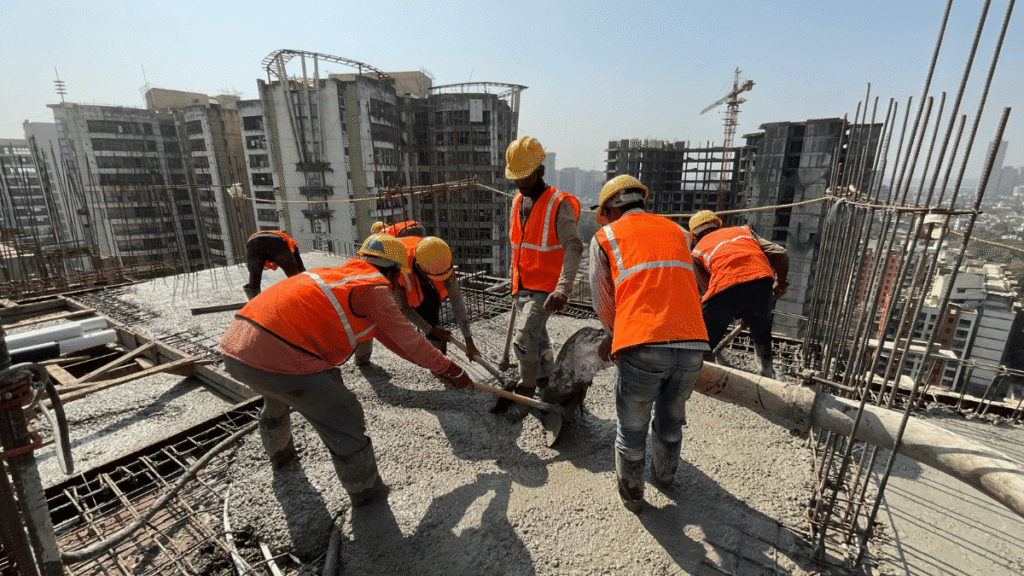
Yet the slowdown in resale activity tells only half the story. On the construction side, Houston remains the undisputed engine of Texas homebuilding. HBW’s building-activity data showed the metro pulled 2,932 new residential permits in August 2026 — about 45 percent of all new-home permits statewide, representing more than $936 million in construction value. Suburban growth is driving it: Montgomery County actually out-permitted Harris County for the month, underscoring how far the region’s expansion has pushed beyond the urban core.
That split — a cooling resale market alongside relentless new construction — is where builders and developers now have to operate carefully. Buyers have options, material and labor costs remain elevated, and the firms that win are the ones that can deliver without wasting money. It’s a dynamic that rewards operational discipline over aggressive pricing.
“A balanced market rewards discipline,” said Jamal Kaileh, a Houston-based construction and real estate operator and a partner at Theta Group Development and Founders Investment Group. “When buyers have options, the builders who control their costs and deliver on time are the ones who keep selling. In this market you can’t price your way out of a project that’s run inefficiently — the margin has to come from how well you run the job.” Kaileh, whose work spans concrete and infrastructure, commercial construction, and residential development, said the operators he sees thriving are treating cost control and scheduling as competitive advantages rather than back-office concerns.
The affordability picture helps explain why demand hasn’t collapsed. HAR’s data show the share of Houston households able to afford a median-priced home rose to roughly 42 percent, up from 37 percent a year earlier, as modest rate relief and flat prices improved buying power. That improvement is concentrated in the entry-level and mid-tier bands — exactly where much of Houston’s new suburban construction is aimed.
For the months ahead, the fundamentals that have long underpinned Houston — population growth, job creation, and abundant developable land — remain intact, even as both sales and permit volumes run below last year’s pace. The market isn’t booming and it isn’t busting; it’s normalizing. And in a normalized market, as operators across the region are learning, the advantage shifts from whoever can charge the most to whoever can build the smartest.