
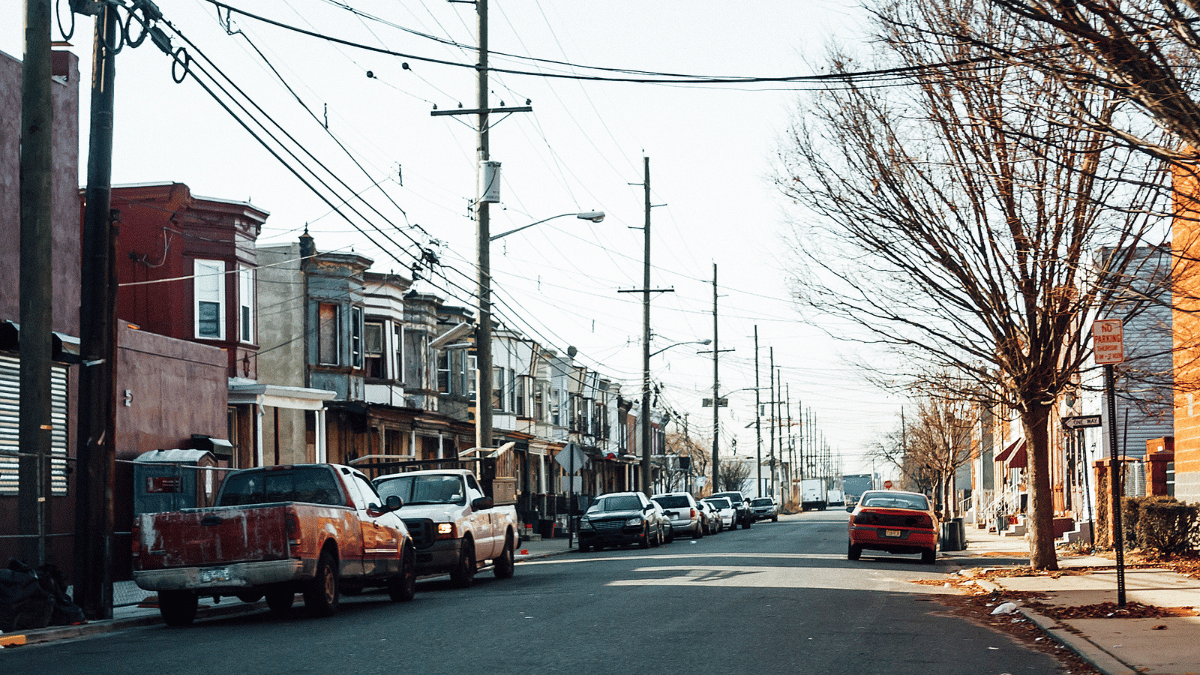

Many people would agree that Camden’s big drop in crime has completely changed how residents and visitors view the city. It was once thought of as a very violent city; however, many of Camden’s neighborhoods are now much safer and emerging as solidly safe and growing communities. There is still a lot of crime in some neighborhoods, but new policing strategies, as well as several large development projects, have made parts of Camden significantly safer than they were ten years ago.
Three sections of Camden are consistently ranked among the safest in the city according to recent crime statistics: the waterfront district, the Rutgers-Camden area, and the eastern part of Camden. These districts have received the greatest benefit from Camden’s policing reform, long-term investments, and increased foot traffic from visitors.
Here is a detailed look at each section.
The Waterfront District: Safety due to dense police presence and steady redevelopment
The waterfront area of Camden is now considered one of the safest sections of the city. This district is home to Adventure Aquarium, the Freedom Mortgage Pavilion, residential towers, restaurants and cafes, and new office developments.
There are a number of factors contributing to the low crime rates in this district:
• An abundance of police presence in the district in the form of River Avenue bike patrols and walking path patrols.
• High foot traffic generated by concerts, events, and tourist activity.
• New lights, video cameras, and redesigned streets.
• Private security working in conjunction with county police.
Tourists often state that the waterfront area of Camden is a quiet, clean and well-policed area. The area is designed to handle the large amount of foot traffic generated by the concerts, events, and tourist activities. The design of the waterfront area is intended to provide a safe and efficient environment for moving large crowds, which should help to eliminate the opportunities for criminal activity and increase visibility.
According to a spokesperson for the Camden County Police Department, the waterfront area is safe because of “the continuous deployment of police officers on bicycles, foot patrols and horseback patrols” providing an environment in which crime is unable to establish itself.
Rutgers-Camden and Cooper Plaza: Safe because of student population
In addition to the waterfront area, the Rutgers University-Camden and Cooper University Hospital areas are two of the safest in the city. The thousands of students and employees who travel throughout this area every day creates a constant flow of people.
There are a number of reasons why the safety has improved in this area:
• A close relationship between Rutgers-Camden security and county police.
• Alert systems on campus that provide alerts to local authorities when there may be a threat to safety. Additionally, the Rutgers police patrol the streets adjacent to the campus.
• New graduate housing, retail space, and academic buildings.
• New lighting and road improvements.
Cooper Plaza is located just south of the hospital. In recent years, Cooper Plaza has experienced new housing development, more homeowner-occupied houses, and continued investment from hospital affiliated organizations. All of these changes have provided stability and eliminated the vacant houses that previously contributed to crime.
“There are always people walking,” said a Rutgers staff person. “The constant movement gives the feeling of safety that Camden used to lack.”
East Camden: Improved community spirit and continued revitalization
East Camden has undergone significant changes in the last decade. Although it is still a working class neighborhood, East Camden has shown lower rates of violent crimes compared to central and northwest Camden.
There are several key reasons why crime is down in East Camden:
• Homeowner communities in the area have maintained a stable quality of life and have been able to keep their blocks safe.
• Neighborhood associations in the area have been actively working to improve lighting and to enforce codes.
• A mix of new businesses and renovation of existing row houses.
• Walking patrols and community engagement programs.
Although East Camden has not had the same level of large-scale development as the waterfront or medical districts, residents feel that the area is improving. Parks are being restored, homeownership is increasing, and the businesses along Federal Street are reporting fewer incidents.
“I’ve lived here for twenty years,” said East Camden resident Hector Morales. “I really notice police patrolling now. Not just driving by.”
What about Camden’s highest-risk areas?
While crime is still concentrated in central Camden, Whitman Park and parts of North Camden, these neighborhoods continue to face issues related to abandoned properties, unstable economies, and the drug trade. Crime remains higher than the city-wide rate in these neighborhoods, and the risk of victimization varies greatly depending on the specific block.
Despite this, residents often report that these communities are safer than they were prior to the policing overhaul and other efforts to revitalize the neighborhoods.
The city plans to address these areas with new youth job programs, additional social services, and park restoration.
Why some areas developed at a faster pace than others
Three primary factors explain why some neighborhoods developed at a faster pace than others:
1) Investment followed opportunity
Neighborhoods with access to universities, hospitals, concert venues and tourism, etc. saw the earliest redevelopment. This led to the creation of construction projects, private security, and more eyes on the street.
2) Policing was concentrated strategically
When the Camden County Police Department began operating in 2013, it placed a heavy emphasis on establishing walking beats in areas that drew large crowds or contained important institutions. This allowed for the establishment of consistent safety zones.
3) Stable housing reduces crime
Neighborhoods with higher homeownership rates, active block associations, and fewer abandoned houses tend to have lower rates of violent crime. East Camden and Cooper Plaza both benefited from this trend.
Neighborhoods in Camden with the lowest rates of violent crime
As per 2024 and 2025 crime statistics:
• Camden Waterfront
• Rutgers-Camden and Cooper Plaza
• East Camden (specifically Federal Street and Dudley Grange Park)
These neighborhoods are the current leaders in having the lowest violent crime rates and the best perceptions of safety among residents and visitors.
What does Camden’s crime reduction mean for the future
While Camden’s crime reduction is certainly positive, it is also highly uneven. The safest neighborhoods in Camden are examples of the positive effects of long-term investment, community partnerships and a visible police presence. City officials hope that these successful neighborhoods will serve as a model for the remaining areas of the city.
“Camden is not finished rebuilding,” stated Camden Chief of Police Gabriel Rodriguez. “However, the direction is clearly positive. Where we invest our time and money, we see results.”